



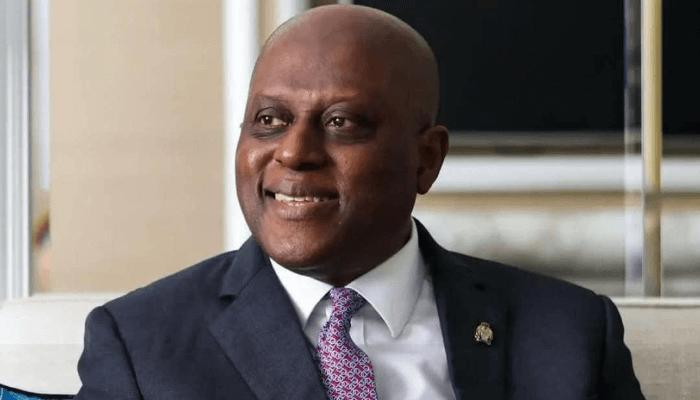
• File Photo of Olayemi Cardoso
Nigeria’s Central Bank governor, Olayemi Cardoso, said on Thursday that cross-border payments remain too inefficient to support inclusive growth in developing economies, warning that high costs and settlement delays are shutting millions out of global trade and finance.
Cardoso spoke today at the G-24 Technical Group Meetings in Abuja, and emphasised that payment systems now sit at the heart of global economic integration and financial stability, but remain structurally biased against emerging and developing markets.
“Today, cross-border payments remain too slow, too costly, and too fragmented, especially for developing economies.
“With global remittance corridors costing over 6.0 percent, settlement lags of several days, and compliance burdens that exclude MSMEs, millions remain disconnected from global opportunity,” said Cardoso.
He argued that reforming cross-border payments is not merely a technical upgrade but a macroeconomic priority, as the channels through which capital, remittances and trade flow increasingly shape financial stability.
According to him, inefficiencies translate directly into higher foreign-exchange costs, fragmented settlement processes and barriers for small and medium-sized enterprises seeking to participate in global trade.
“At the heart of this transformation lies a simple, yet powerful truth: an economy cannot be more inclusive than its payment system,” Cardoso said, linking digital cross-border infrastructure as foundational to economic participation.
Meanwhile, the G-24, or Group of 24, is an intergovernmental group of developing countries that coordinates on international monetary and development finance issues.
Despite the name, it actually has 28 members today, including, include Algeria, Argentina, Brazil, Colombia, Côte d’Ivoire, Congo, Ecuador, Egypt, Ethiopia, Gabon, Ghana, Guatemala, Haiti, India, Iran, Kenya, Lebanon, Mexico, Morocco, Nigeria, Pakistan, Peru, the Philippines, South Africa, Sri Lanka, Syria, Trinidad and Tobago, and Venezuela.