





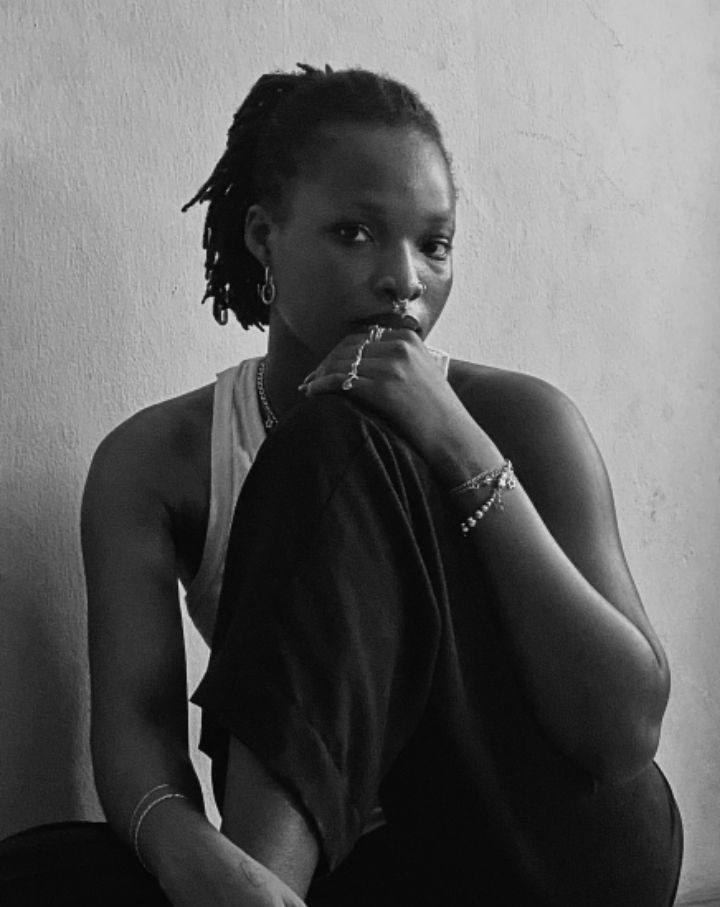
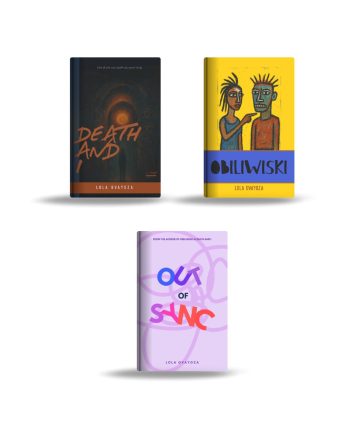
Lola Ovayoza is the author of Death and I, a supernatural thriller; Obiliwiski, and Out of Sync.
Tell us about your educational and professional background.
My educational and professional journey is closely connected. After my formal schooling, I pursued further training in copywriting and blogging, which strengthened my storytelling and communication skills.
However, my foundation as a writer began much earlier; I started writing at the age of nine, initially exploring screenwriting. Some of my early scripts have been produced as short films on YouTube.
I officially began my career as a published author in 2023 with my debut, Death and I, a supernatural thriller.
Given your background as an author, what do you write about?
I write about the complexities of the human mind and behaviour, the “how” and “why” behind people’s actions.
My work spans both fiction and non-fiction across multiple genres, including thrillers, horror, contemporary fiction, romance, action, fantasy, and African spirituality.
On the non-fiction side, I focus on memoirs and biographies. I also offer writing services, primarily within the non-fiction space.
Do you write for the general audience or a specific demography?
I believe each genre naturally finds its audience, so the book often determines its demographic.
That said, some of my work is intentionally broad in reach.
For instance, my recent book Out of Sync is written for a general audience, as it explores neurodivergence in an accessible and relatable way.
Mention some book titles you have published, and those still on the shelf as manuscripts.
I currently have three published books: Death and I, Obiliwiski, and Out of Sync.
My books are widely accessible both locally and internationally. In Nigeria, they are available in bookstores such as BookPeddler, BookLoft, and BuyBooksInPortHarcourt, and they are also archived at the National Library of Nigeria.
Among my unpublished works, two notable manuscripts are Love and Chaos: The Prelude and A Love of Beauty and Chaos, part of a romance series that explores themes such as trauma, family dynamics, mental health, and women’s experiences.
What are the educational and investment value of your books, bearing in mind the federal government’s new education curriculum is now emphasising technical, vocational, digital and investment skills.
My books are deeply rooted in education through storytelling.
Out of Sync, for example, focuses on neurological health, particularly ADHD and autism, covering lived experiences, challenges, and possible treatment approaches.
In Obiliwiski, I also touched on health topics like endometriosis.
While my work is largely fictional, it is heavily research-driven.
I often engage directly with individuals who have lived these experiences to ensure authenticity.
This approach allows my books to inform, build empathy, and contribute to ongoing conversations around health, identity, and personal development areas that align with modern educational priorities.
Now, let’s talk about accessibility and affordability of your books- are they available at bookshops, are they online and things like that.
My books are widely accessible both locally and internationally. In Nigeria, they are available in bookstores such as BookPeddler, BookLoft, and BuyBooksInPortHarcourt, and they are also archived at the National Library of Nigeria. For a global audience, my books are available on platforms like Amazon and Kobo.
I also provide digital versions through Selar and Pabpub.
In terms of affordability, I make a conscious effort to keep my books accessible, with prices ranging between ₦2,000 and ₦10,000, depending on the format.
How are you promoting your books to the Federal / State Ministry of Education and schools?
At the moment, I am actively researching and developing structured approaches to engage with educational institutions and government bodies.
Out of Sync is the book I most want to push into schools and educational spaces, and I’m actively mapping out the best way to do that.
It’s high time we started paying attention to mental health and helping people understand that others are actually struggling.
I am particularly interested in contributing to conversations that encourage better understanding, early intervention, and more accessible support systems.
What of membership in a local or foreign association of authors?
This is something I am currently looking into, both local and international associations.
I want to connect with the wider literary community and build those professional relationships.
Last, when do you write, and how do you relax?
Writing is a daily practice for me. It’s both discipline and instinct.
As for relaxation, I’m still learning how to intentionally create space for it, but I find that stepping away from work and engaging in quiet, reflective moments helps me reset.