









The Nigerian Association of Chambers of Commerce, Industry, Mines and Agriculture (NACCIMA) emphasised that “Technical and Vocational Education and Training (TVET) through public private partnership (PPP) must take the center stage in Nigeria.”
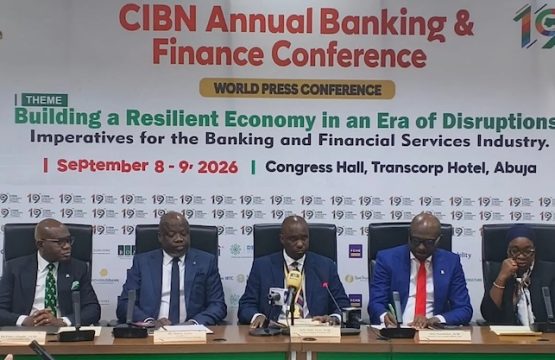
The National President of NACCIMA, Mr. Jani Ibrahim, emphasised the need during the stakeholders’ summit with the theme “Building Industry-Ready Professionals for a $1 Trillion Economy: Strengthening TVET Through Public -Private Partnership,” which was convened by NACCIMA.
Ibrahim said that the paradox that should be of concern was that while official unemployment figures appear moderate, the reality was that a significant proportion of the workforce, over 90 percent, was engaged in informal or vulnerable employment, often lacking productivity, stability, and growth potential.
He added: “At the same time, youth unemployment and underemployment remain persistent, with many young Nigerians unable to transition effectively from education into meaningful work.
“This is not merely a labour market issue; it is a structural economic challenge.
“And this is where TVET must take centre stage.”
He emphasised that globally, “economies that have successfully industrialised and sustained growth have done so on the backbone of strong technical and vocational systems, systems that are demand-driven, industry-led, and innovation-oriented.
“In Nigeria, however, the story has been different. For too long, our education and training systems have not sufficiently aligned with the needs of the real economy.
As a result, we continue to produce graduates who are qualified on paper, but not adequately equipped with the practical, technical, and entrepreneurial skills required in today’s workplace,” he said.
The Chairman, Education Committee, NACCIMA, Prof. Abdu-Na’allah, added that global projections are indicating that by 2030, over 50 percent of jobs would require intermediate technical skills, many of which fall squarely within the domain of TVET.
He noted that even though Nigeria has made important policy strides with frameworks such as the National Skills Qualification Framework, amongst others, “the challenge before us is not just policy formulation but policy implementation, coordination and scale.”