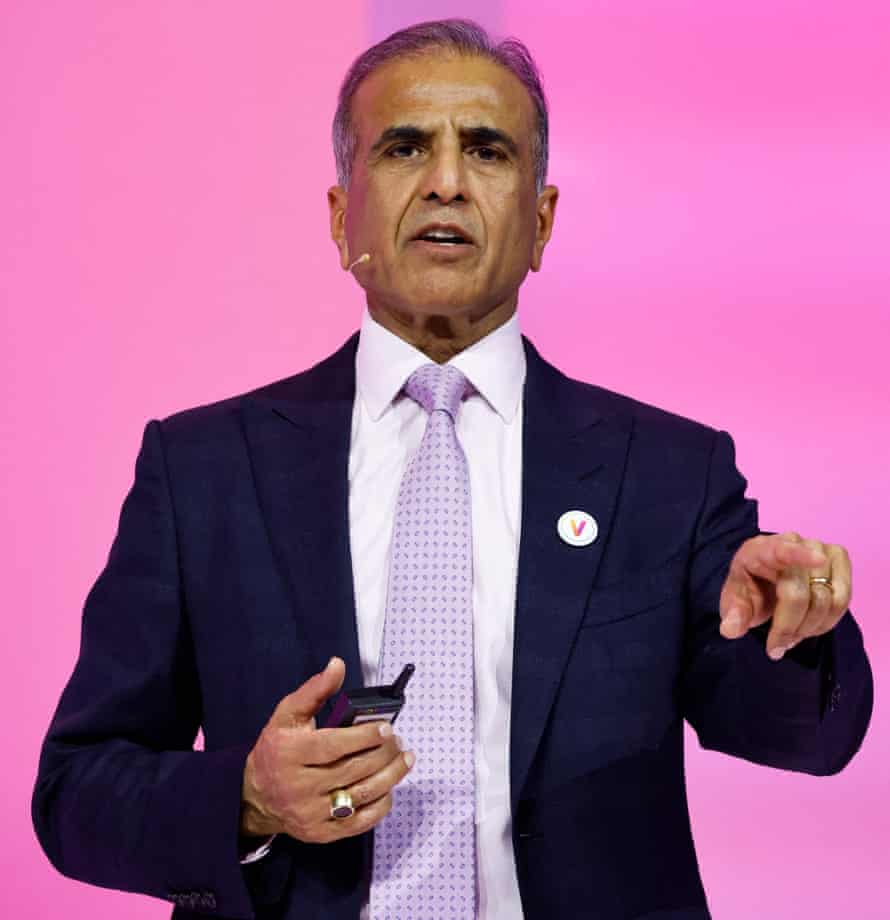









In picture : Closing gong ceremony marking the official commencement of the T+1 settlement cycle. The event was attended by CEOs of Exchanges market operators, regulators, stockbrokers, and leaders of trade associations across the capital market ecosystem.
The Securities and Exchange Commission (SEC) has set fresh targets to transition trading activities on the Exchange to same day T+0 settlement cycle.
Director-General of SEC, Dr. Emomotimi Agama, disclosed this during the T+1 Settlement Cycle Transition Ceremony held in Lagos on Monday 2 June, 2026.
” The Commission has begun planning toward same-day settlement,” he said , emphasising , “The SEC has already signalled its intention to continue this journey toward T+0 settlement, not as a distant aspiration, but as a near-term regulatory planning objective.”
Agama emphasised that the successful migration to T+1 shorter settlement cycle has placed Nigeria among markets representing about 60 percent of global market capitalisation that have already adopted the shorter settlement cycle.
“The United States, Canada and Mexico transitioned to T+1 settlement on the weekend of 25–27 May 2024. India had already implemented T+1 in a phased approach since 2022 and 2023. The European Union, the United Kingdom, and Switzerland have now announced plans to adopt T+1 in October 2027,” he said.
He explained: ” The T+1 transition means that securities transactions executed on the Nigerian Exchange Limited (NGX) will now settle one business day after trading, allowing investors to receive cash or securities faster than under the previous T+2 framework.
“ The financial world is embracing T+1 rapidly, and what was once considered advanced is quickly becoming the baseline expectation for any market serious about competing for international capital.”
Agama said that the shorter settlement cycle would reduce counterparty risks, improve liquidity and enable investors to access funds more quickly.
“What does that mean for a retail investor in Lagos, Kano, or Port Harcourt who sells shares today? It means their cash is available tomorrow. Not in two days. Not in three. Tomorrow,”he said.
He noted that Nigeria moved from a T+3 settlement cycle to T+2 in November 2025 and has now completed the next phase of the transition within six months.
“Today, we are here. In just six months, we have closed that gap again. And we have done so without disrupting market operations, without shaking investor confidence, and without leaving any category of market participant behind.”
Chairman of NGX Group, Umaru Kwairanga said thatthe shorter settlement cycle would improve efficiency and enhance the experience of investors.
“If you buy today, your account will be debited tomorrow. If you sell today, you will get payment tomorrow,” Kwairanga said.
“The move reinforces the Nigerian market as one of the most efficient markets globally.” He assured investors that market operators would continue to introduce initiatives aimed at making participation in the Nigerian capital market easier and more efficient.
The transition to T+1 settlement forms part of broader reforms being implemented under the Investments and Securities Act 2025 and ongoing efforts by regulators and market operators to deepen the market, improve infrastructure and attract greater domestic and foreign participation.
Chairman of CSCS and Group Chief Executive Officer of NGX Group, Temi Popoola, said the implementation of T+1 is part of a broader strategy to deepen market liquidity and expand investment opportunities.
“This is really not a destination at all. This is part of a longer journey that we’re trying to do,” Popoola said.
He disclosed that stakeholders are already working on initiatives to strengthen market depth, improve technology infrastructure and expand activity beyond traditional equities.
How do we start to position the entire ecosystem away from just our regular shares and the regular equities that you know us for, how do we get into private markets, how do we get into fixed income, how do we get into digital assets?”
Earlier, Managing Director of the Central Securities Clearing System (CSCS), Shehu Shantali, described the transition as the latest milestone in a modernisation process that began more than three decades ago.
According to him, the establishment of CSCS in 1992 and the commencement of operations in 1997 transformed the post-trade environment through automated clearing, settlement and electronic custody of securities.
“Today’s transition to T+1, therefore, represents not a single event, but the latest chapter in a modernization journey that has been underway for more than three decades.
”Shantali said the journey toward T+1 formally began in 2023 when SEC inaugurated an industry-wide committee to assess the readiness of the market for a shorter settlement cycle.
He added that CSCS had invested significantly in infrastructure upgrades, including API-enabled integrations, enhanced processing systems, cybersecurity improvements, digital self-service platforms and business continuity capabilities.
“The benefits of T+1 settlement are substantial.
A shorter settlement cycle reduces counterparty risks by limiting the period between trade execution and settlement. It improves liquidity by enabling investors to access and redeploy capital more quickly.”