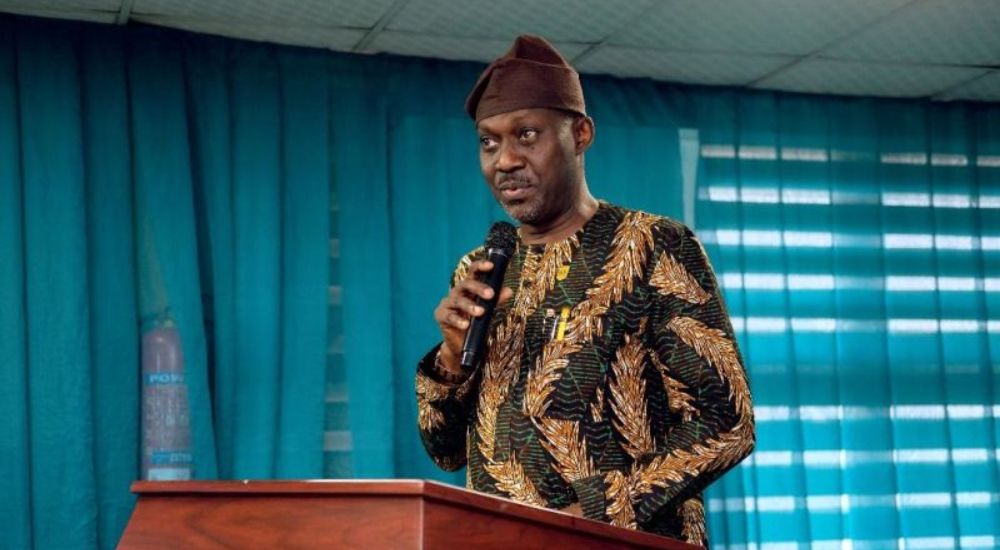
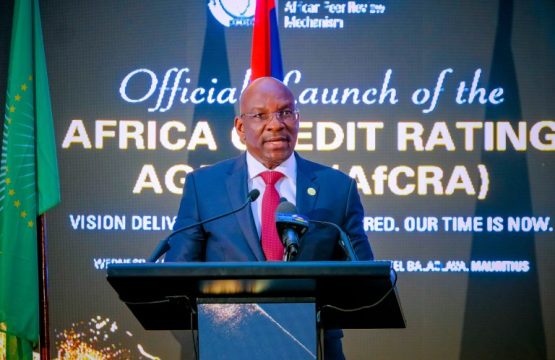



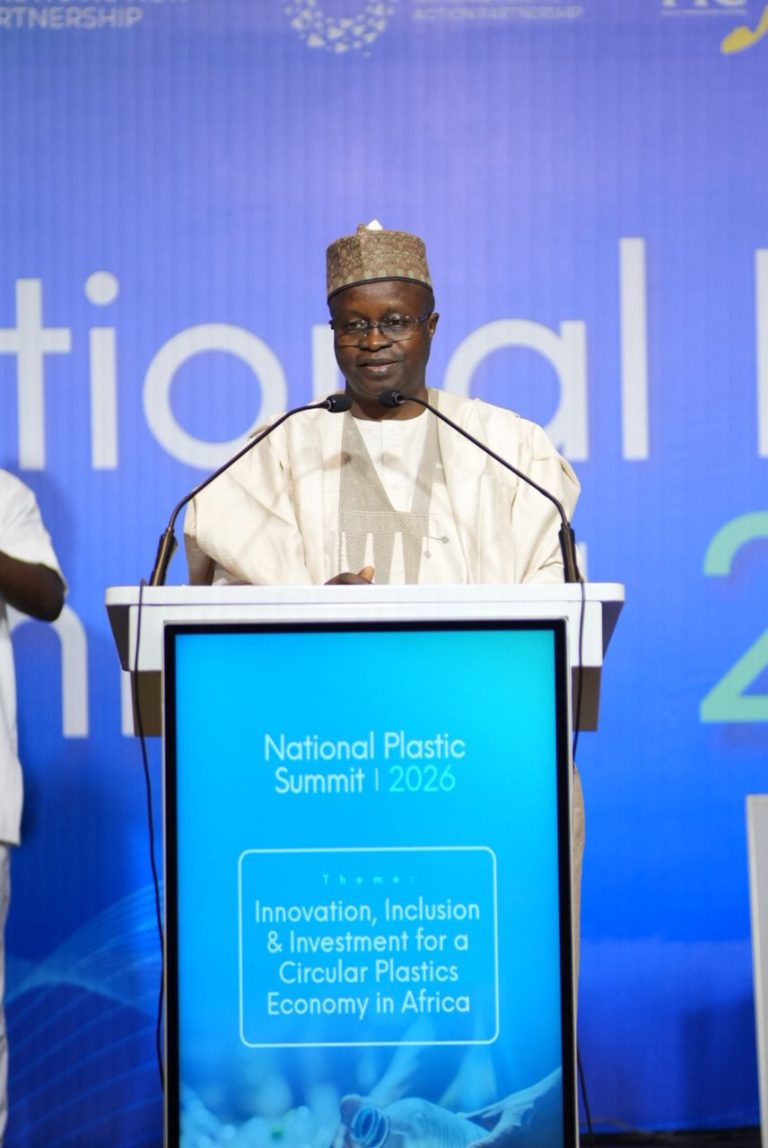
Photo: The Permanent Secretary, Dr Salihu Usman deliver the minister’s speech.
Nigeria’s Minister of Environment, Balarabe Abbas Lawal, has described plastic pollution as “one of the most pressing environmental, economic, and public health challenges of our time.”
The Minister stated this on the occasion of National Plastic Summit 2026, convened by the Nigeria National Plastic Action Partnership (NPAP Nigeria), hosted by the Policy Innovation Centre (PIC), and supported by the Federal Ministry of Environment and the Global Plastic Action Partnership (GPAP) of the World Economic Forum.
Calling for action , the minister said that Nigeria must take urgent steps to address the growing challenge of plastic waste.
“Nigeria generates more than 2.5 million tonnes of plastic waste annually, with a significant portion ending up in our rivers, oceans, farmlands, and streets,” the minister stated.
Represented by the Permanent Secretary, Dr Salihu Usman, Lawal said the challenge extends beyond environmental concerns, noting that plastic pollution affects agriculture, fisheries, tourism, public health and economic productivity.
“This summit must therefore move us beyond awareness and into action. It must help us build a sustainable plastic economy, one that promotes responsible production and consumption, encourages innovation, strengthens recycling systems and supports a circular economy where waste is seen as a resource rather than a burden,” Lawal said.
The minister outlined priorities including stronger policy implementation, investment in recycling infrastructure, behavioural change, technology adoption and full implementation of Extended Producer Responsibility (EPR).He urged stakeholders to work collectively towards a cleaner and more sustainable future, adding: “Let this summit not end as another conversation. Let it produce practical outcomes, stronger partnerships, and a clear national roadmap with measurable targets and accountable mechanisms.”
The two-day summit themed ‘Innovation, Inclusion and Investment for a Circular Plastics Economy in Africa’ brought together stakeholders from government, industry, development institutions, civil society and the plastics value chain in Abuja to advance innovation inclusion and investment for a circular plastics economy in Nigeria and across Africa.
Speaking, the Executive Director of the Policy Innovation Centre (PIC), Dr Osasuyi Dirisu, said the gathering was designed to reposition plastics circularity as a development issue capable of driving jobs, livelihoods and inclusive growth.
“We are at a point where we acknowledge that for some reason, plastic is at the centre of a lot of manufacturing. But also, it can be at the centre of also degrading our environment,” she said.
Dirisu stressed the need to transform waste into economic opportunities, saying stakeholders must “begin to look at the plastic conversation as a development issue and start to think about real opportunities to translate what looks like waste into opportunities.
According to her, a financing roadmap unveiled at the summit is aimed at attracting investments and scaling circular economy solutions.“The whole idea is for you to begin to move the beautiful ideas, the innovation and the opportunities into real tangible progress. “You need to ask yourself, ‘Where is the money? Show me the money to make this happen,’” she stated.
A major highlight of the summit’s was the inauguration of the Finance Taskforce for Plastic Action in Nigeria, established to mobilise investment and accelerate financing for plastics circularity, recycling infrastructure and sustainable waste management across the country.
Source: Voice of Nigeria