





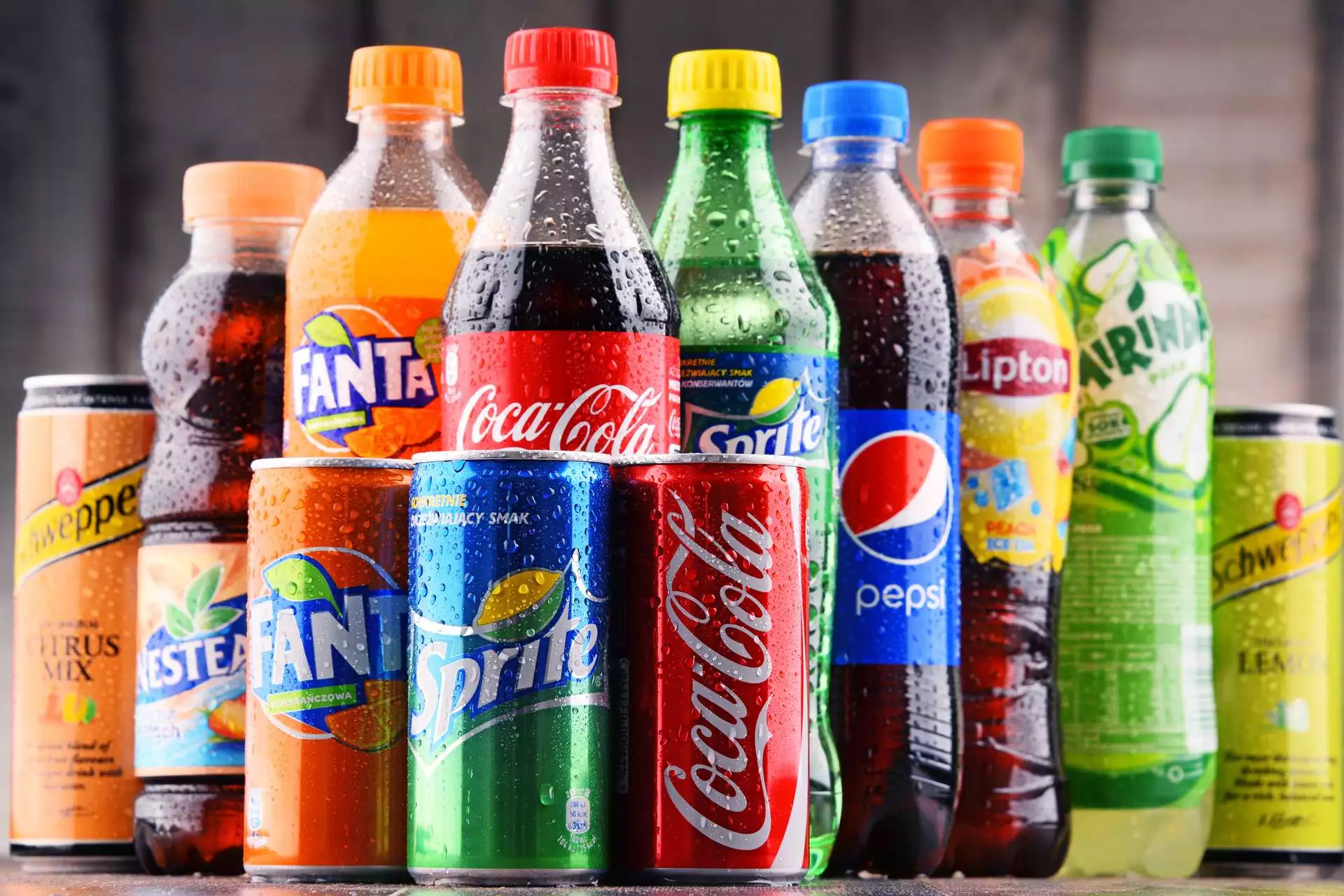
• A display of made- in -Nigeria sweetened beverages
How It Started
The Sugar-Sweetened Beverages (SSB) Tax originated from recommendations by the World Health Organization (WHO), which has consistently urged governments worldwide to adopt taxes on sugary drinks—ideally amounting to 20 percent of the retail price—to reduce consumption, improve public health outcomes, and lower rates of preventable deaths linked to non-communicable diseases.Nigeria’s growing health burden has given added urgency to the issue.
With more than 11 million Nigerians reportedly living with diabetes and thousands dying annually from preventable complications, the Federal Government moved to address the challenge through fiscal policy measures, leading to the introduction of the SSB tax amendment bill.
The Senate Joint Committee on Finance, Customs and Excise subsequently convened a public hearing in Abuja to receive submissions from stakeholders across the country.
The proposed legislation is formally titled:”A Bill for an Act to Amend Section 21(3) of the Customs, Excise Tariffs, Etc. (Consolidation) Act to Replace the Fixed Ten Naira (₦10) Per Litre Excise Duty on Non-Alcoholic, Carbonated Sugar-Sweetened Beverages with a Percentage Levy Based on Retail Price, and to Provide for the Earmarking of a Portion of the Revenue for Health Promotion and Disease Prevention Programmes.”
In Nigeria, one of the leading advocates for higher taxes on sugary drinks is Corporate Accountability and Public Participation Africa (CAPPA), a non-governmental organisation focused on food systems, environmental issues, and public accountability.
CAPPA has actively campaigned for an increase in the current excise duty on SSBs, arguing that such a measure would reduce health risks associated with excessive sugar consumption.
To strengthen its advocacy efforts, the organisation established the National Sugar-Sweetened Beverages Tax Coalition (NSSBTC), a network of more than 45 members comprising civil society organisations, community groups, traditional and religious leaders, health professionals, policy experts, and individual advocates across Nigeria.
CAPPA’s Executive Director, Akinbode Oluwafemi, described the bill as “a significant policy turning point,” noting that Nigeria is facing an escalating burden of non-communicable diseases linked to unhealthy diets and the increasing consumption of ultra-processed foods and beverages.
According to him, nearly one-third of all deaths in Nigeria are now associated with non-communicable diseases.
He argued that excessive consumption of sugar-sweetened beverages remains one of the most preventable drivers of the crisis, citing research that links frequent intake of sugary drinks to obesity, insulin resistance, and high blood pressure, particularly among children and adolescents.
Where We Are Now
On June 2, 2026, the Senate approved the bill, prompting CAPPA to celebrate the development as a major victory for public health.
The bill seeks to replace the existing flat excise duty of ₦10 per litre with a percentage-based levy tied to the retail price of sugar-sweetened beverages. It also proposes earmarking part of the revenue generated for health promotion and disease-prevention programmes.
CAPPA praised the sponsor of the bill, Senator Ipalibo Banigo, for championing legislation aimed at improving the health and well-being of Nigerians.
“This is a commendable and courageous move by the Senate,” Oluwafemi said in a statement, adding that the upper chamber had demonstrated responsiveness to Nigeria’s growing public health challenges.
He urged the National Assembly to expedite the remaining legislative processes to ensure the bill becomes law without delay.
” As the bill proceeds through the remaining legislative stages, lawmakers will be tasked with balancing these competing concerns in pursuit of both healthier citizens and a stronger economy.”
The Opposition: Industry Concerns
While public health advocates welcomed the Senate’s decision, major private-sector organisations expressed disappointment, arguing that the measure could worsen the challenges already confronting manufacturers and consumers.
Leading the opposition are the Manufacturers Association of Nigeria (MAN), the Lagos Chamber of Commerce and Industry.(LCCI), the Centre for the Promotion of Private Enterprise (CPPE), including the Abuja Chamber of Commerce and Industry (ACCI).
Segun Ajayi- Kadir, Director-General of MAB, observed that Nigeria’s per capita sugar consumption remains relatively low at about 7.1kg annually and that there is no conclusive evidence linking sugar-sweetened beverages as the primary cause of non-communicable diseases (NCDs) in the country.
MAN maintained that such health conditions are influenced by multiple factors, including lifestyle, genetics, environmental conditions and broader dietary habits.
The association called for a coordinated excise framework based on predictability, proportionality, minimal market distortion and economic sustainability.
The Manufacturers body urged the Federal Government to engage the National Assembly to discontinue the proposed legislation, preserve the integrity of the 2026–2028 Fiscal Policy Measures framework and ensure consistency in excise policy administration.
The Director-General of the LCCI, Chinyere Almona warned that the proposed tax could deepen the difficulties facing Nigeria’s manufacturing sector.
While acknowledging the need to address public health concerns associated with excessive sugar consumption, she argued that policy interventions should not impose additional burdens on businesses and consumers.
According to her, manufacturers are already contending with high energy costs, exchange-rate volatility, elevated interest rates, logistics challenges, multiple taxation, and weak consumer purchasing power.
Additional taxes, she noted, could increase production costs and ultimately result in higher prices for consumers.
Almona called for broader consultations involving manufacturers, health experts, organised private-sector groups, consumer associations, and other stakeholders.
“Such engagement will help develop a tax framework that promotes product reformulation while preserving sales, jobs, and industrial competitiveness,” she said.
Similarly, the Chief Executive Officer of CPPE, Dr Muda Yusuf, urged the House of Representatives to reject the bill, describing the proposal as “anti-growth.”
Yusuf argued that it would penalise production, discourage investment, threaten jobs, and impose additional costs on consumers already struggling with economic hardship.
He further noted that the 2026 fiscal policy framework already provides for a ₦10-per-litre excise duty on non-alcoholic beverages, warning that introducing a higher levy could create policy inconsistency, increase regulatory uncertainty, and undermine investor confidence.
The President of the Abuja Chamber of Commerce and Industry, Chief Emeka Obegolu, also stressed the need for balance.
“We are not choosing between health and wealth; we are advocating a policy framework that achieves both,” he said.
According to Obegolu, Nigeria can improve public health outcomes while preserving jobs, supporting investment, and maintaining the competitiveness of its manufacturing sector.
“The objective should be to encourage healthier consumption patterns without imposing unintended consequences on businesses and consumers,” he added.
The Debate
The debate over Nigeria’s proposed SSB tax reflects a broader policy dilemma confronting many countries: how to improve public health without undermining economic growth.
Supporters argue that higher taxes on sugary drinks will reduce consumption, lower healthcare costs, and help curb the rise of diabetes, obesity, and other non-communicable diseases.
Opponents, however, contend that the measure could increase production costs, raise consumer prices, discourage investment, and threaten jobs in an already struggling economy.
As the bill proceeds through the remaining legislative stages, lawmakers will be tasked with balancing these competing concerns in pursuit of both healthier citizens and a stronger economy.