






Nigeria’s challenge is no longer simply mobilising capital; it is creating the conditions under which banks can profitably lend that capital to businesses capable of producing, expanding, exporting and creating jobs,writes FRANKLIN OCHENEYI
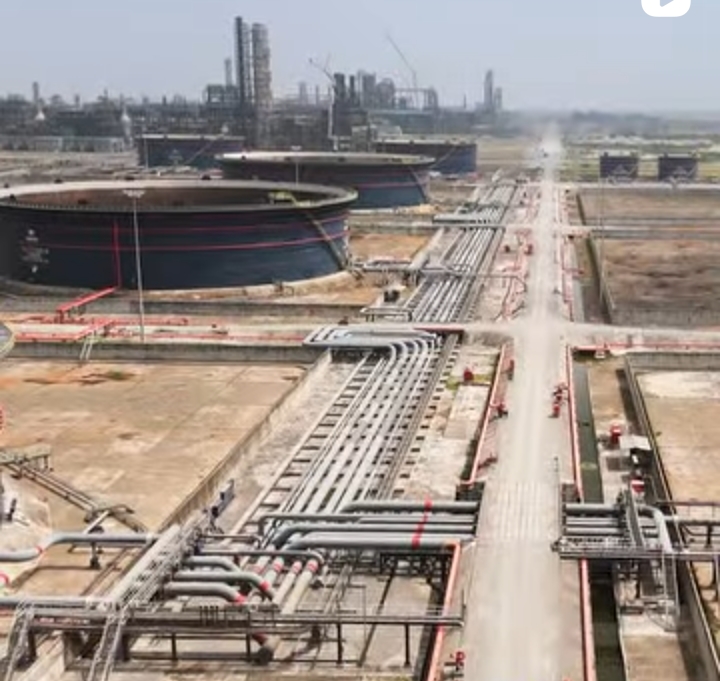
• Image: Dangote Petroleum Refinery, Lagos.
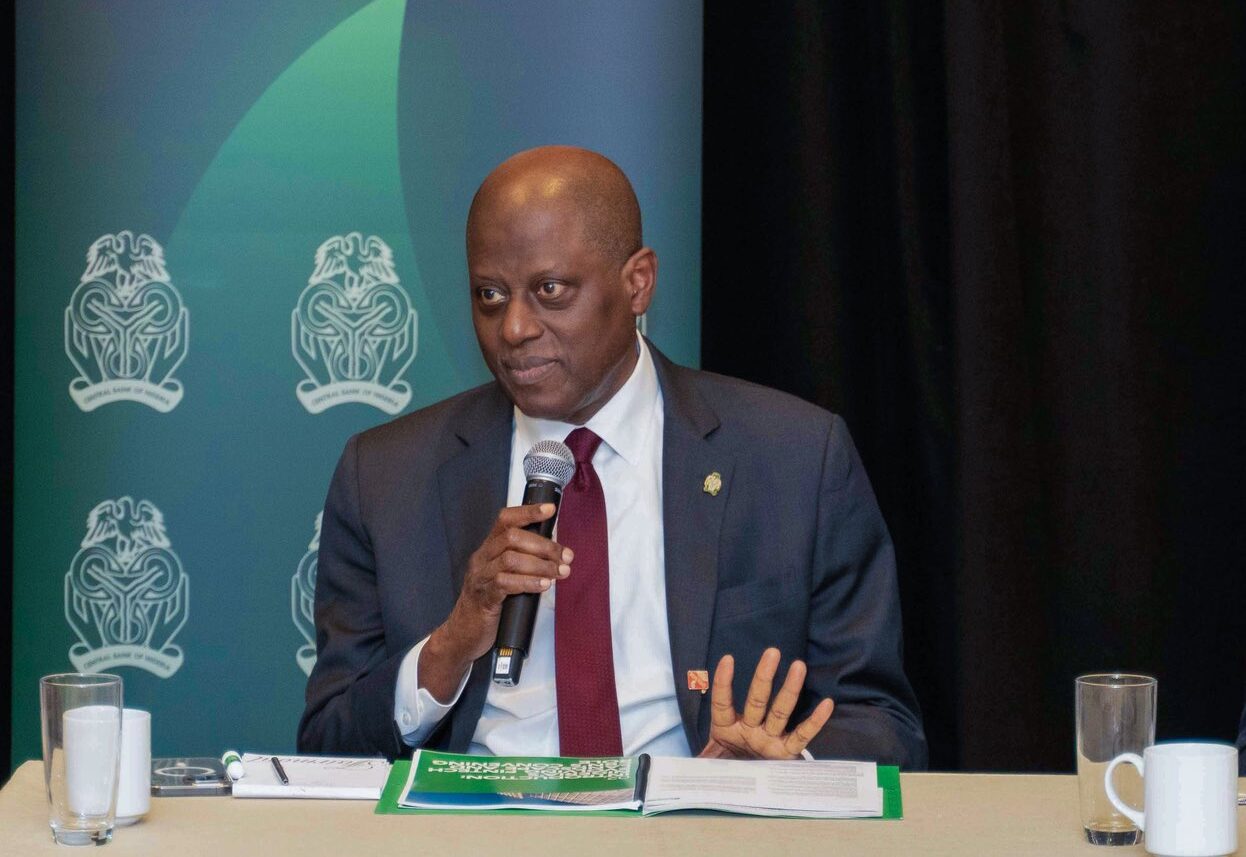
RECENTLY, the Central Bank of Nigeria (CBN) Governor, Olayemi Cardoso , urged commercial banks to lend out their idle funds with the apex bank to the productive sector of the economy.
Nigeria’s productive economy is driven by key sectors spanning manufacturing, agriculture, oil and gas, services industry , and export-oriented businesses.
As at July 2026, Nigerian commercial banks deposited ₦83.95 trillion into the Central Bank of Nigeria’s (CBN) Standing Deposit Facility (SDF).
Instead of this money lying idle, Cardoso emphasised the need for the lending to companies in real sector . Specifically, he made the call during the 306th Monetary Policy Committee (MPC) meeting held in Abuja from July 20 to July 21.
Given this background, the Chartered Institute of Bankers of Nigeria (CIBN) supported the call by Cardoso, urging banks to lend their idle fund more to the real sector of the economy.
President/Chairman of Council, CIBN, Dele Alabi, reasoned that following the concluded CBN) banking sector recapitalisation programme on March 31, 2026, Nigerian banks successfully raised a total of N4.65 trillion in fresh capital, with 33 institutions meeting the new minimum capital thresholds set by the apex regulator.
“Capitalisation provides a buffer for shocks. It sort of insulates banks’ balance sheet. But it does not stop there. Banks must now think more strategically about how to deploy the capital raised,” he said.
According to him, banks previously focused heavily on government securities and top-tier companies, but the changing interest rate environment was making that strategy less attractive.
He added that yields are coming down on the government securities and big borrowers are asking for reduced loan rates.
“Therefore, bankers are preferred to utilize and deploy the recent huge capital that we have with a view to supporting the economy more. And what does that entail? It entails going down a little bit down the ladder to lend to the MSMEs, the micro, the small, and the medium scale enterprises. That is what we are focusing on, and that is where smart bankers will play in order to survive, to continue to do well into the foreseeable future,” he said.
Alabi described capital as the most expensive source of funds and said banks therefore needed to deploy it in ways that would generate sustainable returns while supporting economic activity.He identified MSMEs as a major area of opportunity, arguing that smart banks would need to move further down the lending ladder to serve micro, small and medium-sized enterprises.
“Therefore, smart bankers, smart bank CEOs, have to think of a more ingenious way of utilising this capital,” he said.
However, the Centre for the Promotion of Private Enterprise (CPPE), added another dimension, noting that commercial banks alone cannot sustainably financed the real sector because of their offering short-term bank loans at prohibitively high interest rates.
The Chief Executive Officer of CPPE, Dr. Muda Yusuf, pointed out that Nigeria’s real sector is confronted with a structural financing deficit characterized by prohibitively high interest rates, short loan tenors, stringent collateral requirements, limited risk appetite among lenders, and inadequate access to patient capital.
Dr. Yusuf said the CPPE estimates that the country’s real sector currently faces a financing gap of more than ₦50 trillion, taking into account the unmet funding needs of manufacturing, agriculture, agribusiness, MSMEs, supply chains, and export-oriented enterprises.”
Manufacturing requires substantial medium- and long-term financing for machinery acquisition, factory expansion, technology upgrades, energy infrastructure, automation, backward integration and export development.
“Their long gestation periods and capital-intensive nature require patient, long-term financing at affordable rates, underscoring the critical role of development finance institutions and appropriately structured intervention funds,” he said.
He, therefore, called on the CBN for a comprehensive reform of Nigeria’s Development Finance Institutions (DFIs), arguing that the current mode of operations of the Bank of Industry, and the Bank of Agriculture, is inadequate to address the severe financing constraints facing the country’s real sector.
While acknowledging the shortcomings of previous Central Bank of Nigeria (CBN) development finance interventions—including governance concerns, weak loan repayment culture, political interference, poor beneficiary selection, quasi-fiscal risks, and monetary policy complications—Dr. Yusuf maintained that these weaknesses justify reform rather than abandonment.
Segun Ajayi-Kadir, Director – General of Manufacturers Association of Nigeria -MAN, said that for bank credits to improve the real sector, particularly manufacturing sector , there’s a need for the Central Bank of Nigeria’s (CBN) to lower its monetary policy stance, particularly the Monetary Policy Rate (MPR), which currently stood at 26.5 percent in the second quarter of 2026 (Q2’26).
Dr. Yusuf further recommended that the Central Bank of Nigeria should function primarily as a catalyst, refinancer and risk-sharing institution, while Development Finance Institutions and participating financial institutions handle credit appraisal, lending and loan recovery.
He said the objective should be to leverage public-sector balance sheets to attract private capital, extend loan tenors, reduce identifiable financing risks, and channel significantly more credit to productive sectors without undermining the credibility of monetary policy.
Wrapping up this conversation, Segun Ajayi-Kadir, Director – General of Manufacturers Association of Nigeria -MAN, said that for bank credits to improve the real sector, particularly manufacturing sector , there’s a need for the Central Bank of Nigeria’s (CBN) to lower its monetary policy stance, particularly the Monetary Policy Rate (MPR), which currently stood at 26.5 percent in the second quarter of 2026 (Q2’26).”
The rate remained too high to support the financing needs of the real sector. Two in every three CEOs cited commercial bank lending rates as a disincentive to manufacturing productivity,” he said.
Ajayi-Kadir emphasised that the cost of credit directly influences production cost, combined with rising energy, distribution, shipping and raw material costs, continued to constrain productivity and capacity utilisation.”, he said.
According to him, the prevailing high-interest-rate regime had increased the cost of credit and, by extension, production costs, weakening manufacturers’ ability to expand output, invest and create jobs.
He called on CBN to reduce the MPR to below 20 percent to unlock manufacturing growth, improve access to affordable credit, and give priority allocation of foreign exchange to manufacturers.