





The message from Nigeria’s banking and financial services industry’s latest high-level gathering was unmistakable: a stronger banking sector will mean little to Nigerians if its growing financial capacity does not translate into cheaper credit, more jobs, higher incomes and stronger businesses.
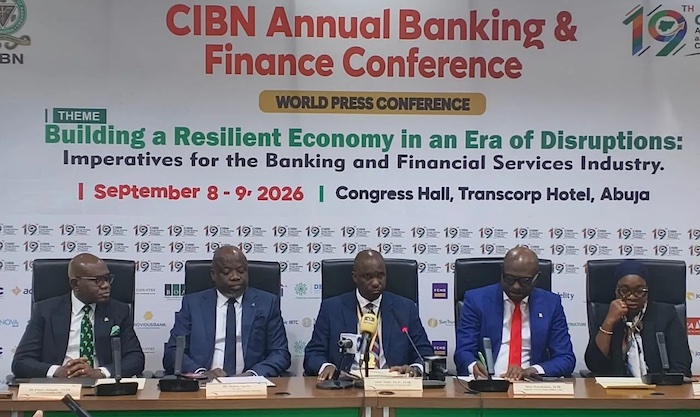
That was the dominant theme at the 19th Annual Banking and Finance Conference of the Chartered Institute of Bankers of Nigeria (CIBN), held in Abuja yesterday.
With the theme, “Building a Resilient Economy in an Era of Disruptions: Strategic Imperatives for the Banking and Financial Services Industry,” the conference brought together senior banking executives, policymakers, economists, government officials, business leaders and development finance experts, including representatives of the World Bank.
At the heart of the discussions was a growing concern that Nigeria’s improving macroeconomic indicators must now produce tangible improvements in the real economy.
Reforms must reach households
The President and Chairman of Council of CIBN, Dr. Dele Alabi, said the ultimate test of Nigeria’s economic reforms should not be limited to headline indicators such as inflation, exchange-rate stability or GDP growth.
According to him, the more important question is whether the reforms are improving the lives of households and businesses.
He argued that macroeconomic progress would amount to little if it failed to produce lower living costs, more employment opportunities, higher incomes and improved living standards.
“Macroeconomic progress must, therefore, be felt at the micro level in households, small businesses and the daily lives of ordinary Nigerians,” Alabi said, stressing the need to build economic systems capable of adapting to repeated shocks.
His position reflects a critical transition in Nigeria’s reform conversation: from stabilising the economy at the macro level to ensuring that the benefits of that stability are transmitted to businesses and consumers.
World Bank: Credit gap threatens job creation
For the World Bank, one of the biggest constraints confronting Nigeria remains inadequate private-sector financing.
The Lead Private Sector Development Specialist at the World Bank’s Nigeria Office, Ms Bertine Kamphuis, urged banks to increase lending to sectors capable of generating large-scale employment, particularly agriculture, manufacturing and micro, small and medium enterprises (MSMEs).
The urgency is underscored by Nigeria’s demographic realities.
With an estimated three to four million young Nigerians entering the labour market annually, the country cannot rely solely on government employment or consumption-driven growth.
Kamphuis therefore stressed the need for greater access to productive credit, particularly for businesses that can expand production and absorb labour.
The implication for the banking industry is significant: credit allocation must increasingly be judged not only by the profitability of individual transactions but also by their capacity to support production, investment and employment.
Oyedele: Bank profits no longer enough
The Minister of Finance and Coordinating Minister of the Economy, Mr Taiwo Oyedele, took the argument further, challenging the industry to rethink the conventional measures of banking-sector success.
While profitability, balance-sheet expansion and shareholder returns remain important, he said they could no longer constitute the full measure of the financial system’s contribution to the economy.
The more fundamental question, according to the minister, is what the financial system is doing for the real economy.
He pointed to the persistent difficulty businesses face in securing affordable credit, manufacturers’ struggle to finance expansion and the large number of productive MSMEs still operating outside the formal financial system.
His argument places pressure on banks to convert their financial strength into greater economic intermediation.
In other words, money must move beyond bank balance sheets and into factories, farms, businesses and productive investments.
CBN: Recapitalisation has created lending capacity
The Central Bank of Nigeria (CBN) also challenged banks to make better use of the capital mobilised during the recent recapitalisation exercise.
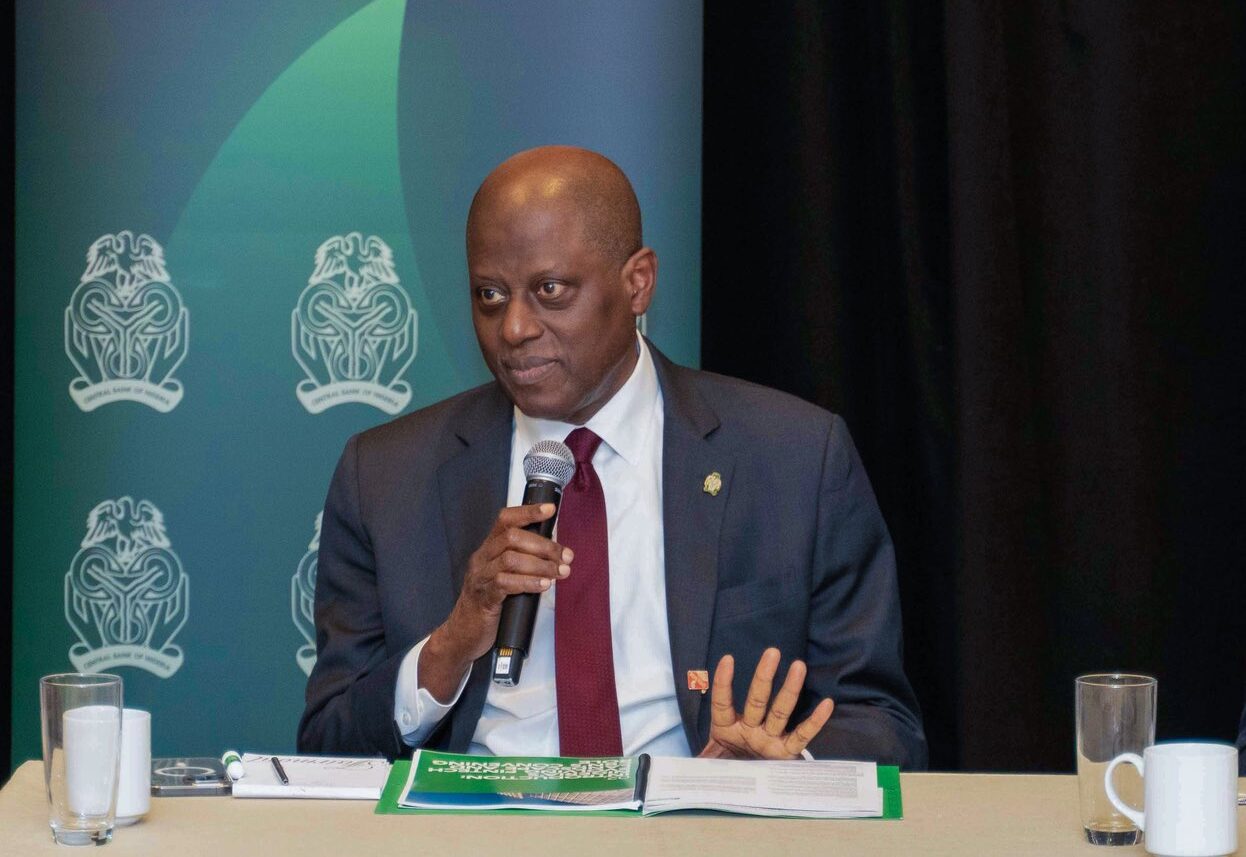
CBN Governor, Mr Olayemi Cardoso, represented at the conference by the Deputy Governor, Policy Directorate, Mr Philip Ikeazor, said the huge capital raised by banks demonstrated the depth of funds available within the domestic economy.
The CBN’s challenge is therefore straightforward: banks must deploy this stronger capital base to finance the real sectors and support faster economic expansion.
The recapitalisation exercise was designed to strengthen banks’ capacity to absorb shocks and finance larger transactions.
The next test is whether that additional capacity translates into increased lending to productive sectors.
Single-digit inflation achievable — CBN
Cardoso also called for stronger collaboration between state governments, the CBN and federal fiscal authorities to bring inflation under control.
He maintained that single-digit inflation is achievable if all stakeholders work together.
That objective, however, will require more than monetary policy alone. Fiscal discipline, improved domestic production, food-supply interventions, infrastructure investment and policies that reduce business costs will all be critical to sustaining lower inflation.
For businesses, particularly manufacturers and MSMEs, sustained price stability would improve planning, investment decisions and access to finance.