







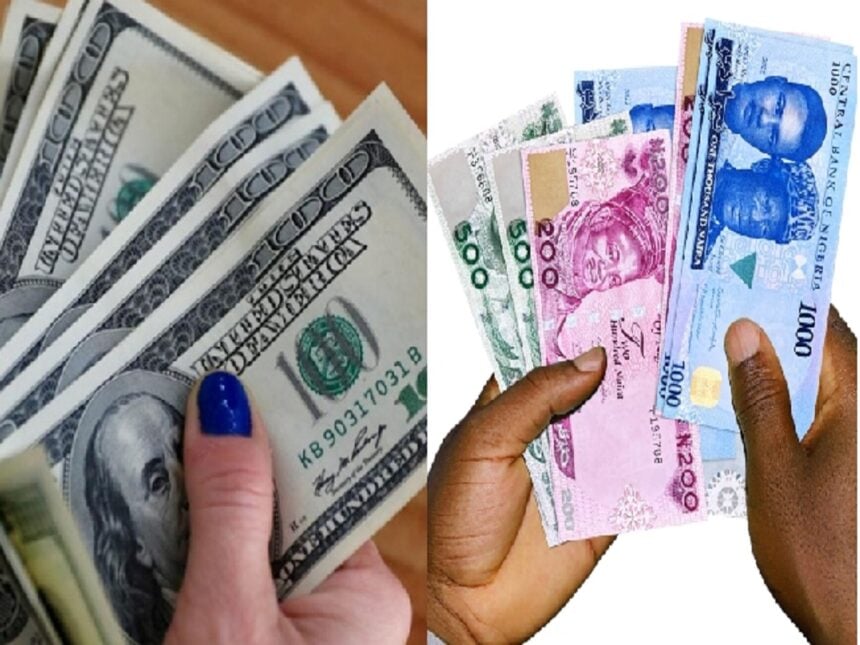
Despite an estimated $1.30 billion intervention by the Central Bank of Nigeria (CBN) in the foreign exchange market, the naira has continued to weaken, raising questions about the effectiveness and sustainability of the apex bank’s efforts to stabilise the currency.
As at Tuesday, November 23, 2026, the naira depreciated by N1,394.01 per dollar in the official foreign exchange market, as pressure on the local currency intensified.
The development came as the exchange rate moved closer to the psychologically significant N1,400-per-dollar threshold, renewing concerns about the CBN’s capacity to sustain its intervention strategy.
The pressure is particularly significant as businesses and households prepare for increased foreign exchange demand during the Christmas and New Year festivities.
Analysts warn that seasonal demand, coupled with increased spending and economic activities ahead of the 2027 general elections, could further complicate efforts to maintain exchange rate stability.
A prolonged depreciation could also increase the cost of imported raw materials, machinery, petroleum-related products and finished goods, with potential consequences for domestic production, consumer prices and household purchasing power.
Official and Parallel Market Rates
Data from the CBN showed that the naira depreciated to N1,394.01 per dollar in the official market.
In the parallel market, the currency traded around N1,445 per dollar, with some market reports quoting rates as high as N1,468.
The widening disparity between the official and parallel market rates highlights the continuing challenges of meeting foreign exchange demand across different market segments.
Despite the estimated $1.30 billion intervention, demand from importers, investors and other foreign exchange participants continued to exert pressure on the naira.
This raises questions about whether the CBN’s interventions are providing lasting exchange rate stability or merely supplying temporary relief to the market.
Why Dollar Interventions May Not Be Enough
Foreign exchange intervention is an important monetary policy instrument through which the CBN can increase dollar supply, moderate excessive volatility and address temporary market imbalances.
However, sustained exchange rate stability requires more than periodic dollar injections.
Nigeria’s structural demand for foreign exchange remains significant because of its dependence on imported machinery, industrial equipment, pharmaceutical products, raw materials and other essential commodities.
Consequently, increased dollar supply may provide temporary relief without necessarily addressing the underlying imbalance between foreign exchange demand and supply.
Other factors, including foreign investor confidence, capital inflows, export earnings, crude oil production and the country’s ability to attract sustainable foreign investment, also influence the naira’s performance.
For an economy heavily dependent on crude oil exports, fluctuations in oil receipts and challenges in translating export earnings into sufficient foreign exchange inflows can complicate currency management.
Christmas Spending and 2027 Election Pressure
The approaching festive season presents another challenge for the foreign exchange market.
Demand for dollars traditionally increases towards the end of the year as businesses import additional goods, households make payments for overseas transactions and companies meet foreign currency obligations.
The political spending cycle ahead of the 2027 general elections could introduce additional demand pressures, although the actual impact will depend on the scale and timing of spending.
If dollar demand continues to outpace available supply, the naira could face further depreciation, potentially increasing the cost of imports and aggravating inflationary pressures.
The Sustainability Question
The central issue is whether the CBN can continue injecting billions of dollars into the market without undermining the country’s external reserves.
While intervention can help moderate short-term volatility, it cannot indefinitely substitute for stronger foreign exchange earnings and improved domestic productive capacity.
A more sustainable approach would require increased non-oil exports, higher crude oil production, improved foreign investment inflows, stronger local manufacturing capacity and policies that reduce Nigeria’s dependence on imported goods.
For manufacturers, exchange rate stability is particularly important because unpredictable currency movements make production planning, pricing and investment decisions difficult.
The CBN therefore faces the challenge of balancing immediate market intervention with longer-term reforms capable of strengthening the supply of foreign exchange.
Ultimately, the success of its intervention strategy should not be measured simply by the amount of dollars injected into the market, but by whether the naira can maintain stability without continuous and potentially costly interventions.