








The Minister of Finance and Coordinating Minister of the Economy, Taiwo Oyedele, has defended the National Bureau of Statistics data on inflation reductions, asserting ,”they are not inaccurate.”
Oyedele made the assertion during the Global Alliance World Public Relations Forum in Abuja on Tuesday, and said “Falling inflation does not mean falling prices. It means prices are rising more slowly than before.”
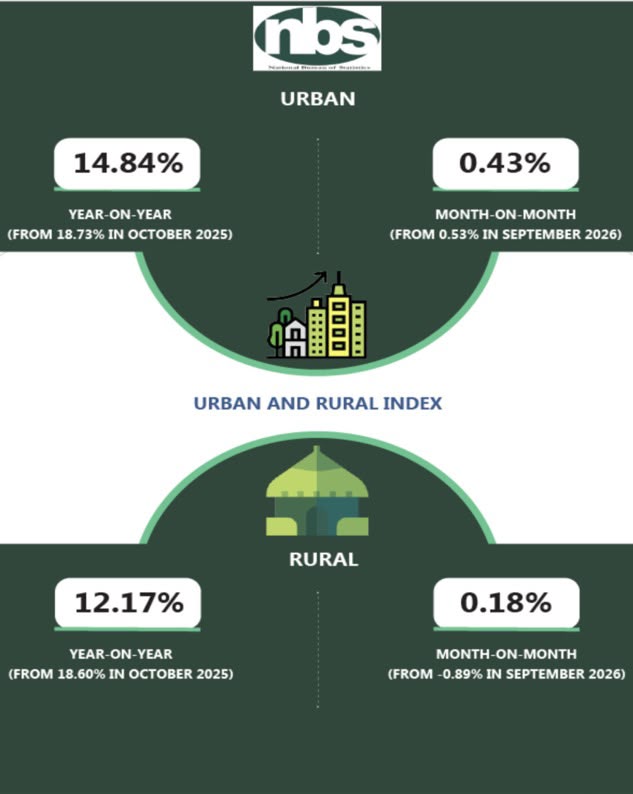
The NBS has reported that Nigeria’s inflation rate declined to 14.06 per cent in October 2026, the lowest level recorded in six years, describing the development as a reflection of the economic reforms introduced by President Bola Tinubu’s administration.
The minister said that the concerns of Nigerians on inflation decling but prices of foodstuff soaring, were understandable, noting that the government needed to do more to explain economic indicators and their implications to citizens.
“Oyedele explained that when families continued to spend heavily on market purchases despite declining inflation figures, they could conclude that the official statistics were inaccurate.
He warned that such perceptions could influence market behaviour, as traders and producers might increase prices in anticipation of further inflation.
“When people stop believing in numbers, they expect prices to rise, and expectations behave like instructions. So traders mark up in advance. Producers protect themselves. The baker and the dairy supplier price increase because they fear prices will go up,” he said.
He identified trust as a critical foundation for economic growth, investment and national development, saying public confidence determines how citizens respond to government policies and economic reforms.
According to him, trust encourages citizens to cooperate with the government, attracts investment and gives businesses the confidence to plan for the long term.