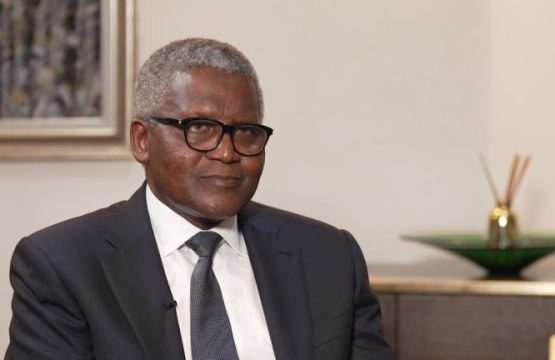
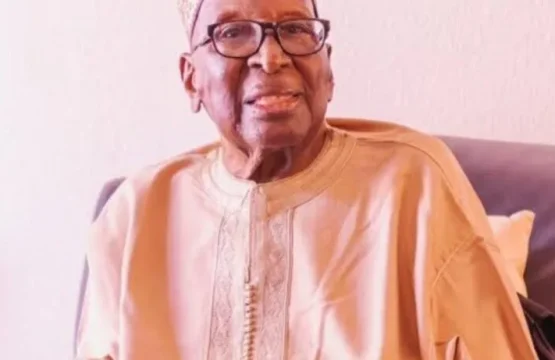

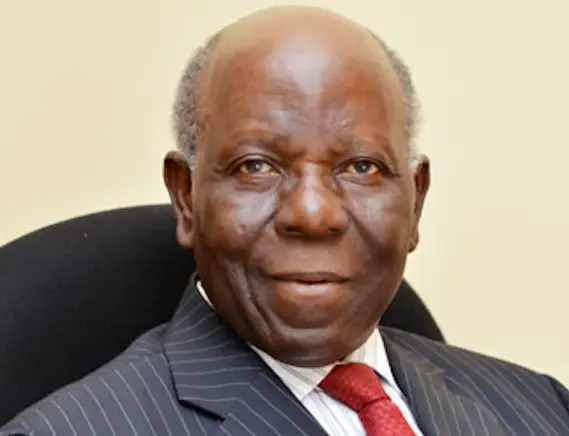
CHIEF Olusegun Osunkeye, ex-Nestle, and GSK Chairman, spoke to a team of Vanguard Newspaper Editors, about GSK exit from Nigeria and the lessons for both domestic and foreign investors. Excerpt:
I feel sad they’re leaving
” I feel sad that they are leaving because I have been part and parcel of GSK for many years. GSK and Nestlé were almost opposite each other at Ilupeju Industrial Avenue, Lagos.
When they came to set up in 1972, I was already at Nestlé. They came as Beecham Limited; Beecham became SmithKline Beecham and later Glaxo. They merged and it later became GlaxoSmithKline.
It is sad because it is a good company. At a time, it was the number two pharmaceutical company in Europe.
They came to set up, we had a factory in Agbara, and everything was promising, but the economy (downturn) set in.
I remember Macleans. We brought Macleans to Nigeria. In fact, we asked the then President Olusegun Obasanjo to come and commission the factory in Agbara.
He sent one Adebayo who was a Minister at that time.
I remember that we told the Research Department about vaccination against malaria and cervical cancer.
It was during the visit that we wanted to open Macleans, so we went to Abuja to see the President, who received us very well.
When he heard that we were going to produce vaccines, not in Nigeria but by Glaxo abroad, he promised that if the vaccines were ready before the end of his tenure, he would make sure every child under five years was vaccinated in Nigeria.
He gave that promise, but it never happened.
It only happened in the last two years. It is because of the economy in Nigeria and the harsh business environment that many businesses do not want to invest.
Foreign exchange is one, corruption is another; inconsistent policies are another and judicial pronouncements – when you are not sure that the judiciary can be fair when there is an agreement dispute.
All these bother foreign companies and Nigerian companies, but Nigerian companies have nowhere to go, so they stay here.
Foreign companies have a choice.
They came because Nigeria clamoured for industrialisation. The environment then was good in the 60s, 70s and so on. When it is no longer there, they have no choice but to leave. Nigerian companies still say and are suffering.
The business environment is harsh.
There is inconsistency of policies, bureaucracy, corruption and all that. I am not saying that the foreign companies do not have their fault, they do.
Procter and Gamble left, I have my own views about that. If Procter and Gamble had taken the long term view, they would have known that they could do backward integration for cotton because cotton is the main thing for their products. But they didn’t do that.
They threw up a factory of 300 million dollars in Agbara, and we applauded them for that.
However, they should have gone to farmers, like the Nigeria Tobacco Company did in those days, and began to plant tobacco.
Also with their expertise, refine the cotton through research to meet the things they needed.
Nestle is a prime example of backward integration
This is where Nestlé was different.
Nestlé is a prime example because they have invested in backward integration; they are resilient, well on the ground and profitable.
The raw materials were imported before, but with people like me being in Nigeria, I was hammering on the need to do backward integration every year when we were doing long-term plans – five or 10 years. Because I am a Nigerian, I know the benefits.
If I was an expatriate, I wouldn’t have the same passion. Fortunately, they listened because it was mutual self-interest.
When I say mutual, it means as they benefit, Nigeria benefits. I am not only an industrialist; I am an accomplished commercial farmer because Nestlé started a subsidiary company and said “you run this subsidiary company”.
The reason for the subsidiary company is to get raw materials – Agro-allied Development Company Nigeria Limited. While we looked for land between Kaduna and Abuja, we found 2,000 hectares which took us 18 months to clear.
Out of the 2,000 hectares, we finally did only 900 hectares. Before planting anything, there was a need to make roads to take machines there.
Then we started asking questions: Where do we get the labourers? We had to go to Kaduna to get labourers. How did we get them from Kaduna to the farm? We had to look for trailers and assemble the labourers because they came from diverse places. These were part of the problems we faced.
When they also worked for one or two hours, they would say they were tired and they wanted to return back to town.
When they got paid weekly, they wouldn’t come again. Those were the problems. Agriculture is more difficult than manufacturing because in manufacturing, one can predict. Are the raw materials ready? Are the machines cleaned? Are they well-tuned?
Once there are answers to these questions, one can start producing the next day. In agriculture, it is not so. I give you two instances.
First, we planted, I think it was the first year. Somebody wanted to kill a rabbit somewhere and I think it went into the hole; to smoke the rabbit out, the person made a fire and set the whole farm on fire. One year effort was gone. The following year, drought came, which was too much. A year after, it was too much rain.
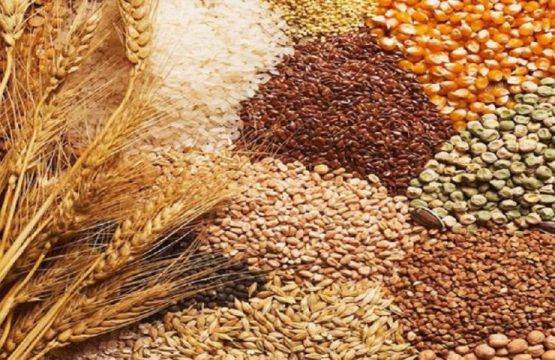
The three things we planted were maize, sorghum and soybeans.
Eventually, it didn’t work out well. At the time we started the farm, we were training about 100, but 70 turned up eventually and we showed them the best practice – when to plant, how to plant and where to plant.
They were supplementing us, but we were still importing some of the things until we could get enough supply. When all these costs were put together, it was unprofitable for us.
This is where the difference is. Nestlé didn’t give up. We trained 70 as farmers and we were buying from them, so they now became our own suppliers. We sold that farm to somebody in the North. I don’t know whether it still exists there. When we sold it, we had enough Nigerians all over.
Today, Nestlé is drawing supplies from over 40, 000 farmers and it is going to be continuous. When we started, Nestlé abroad had to close two factories because our Maggi cube in Nigeria was a big market. Before, we used a raw material called max which was like powder.
It made for employment in Europe, so when we now began to use our own local raw materials and we didn’t need any from them, Nestlé had to close (two factories) and they had union problems.
Nestlé persevered and I must thank Nestlé because it is a serious company that is committed. During apartheid, they said all the foreign companies should leave (South Africa) as a way of punishment, Nestlé said, “no, before apartheid, we were here and after apartheid, we will be here”.
And so it is with Nigeria. They will not leave if you allow them to run the company.
In terms of communism, they left one or two countries because they nationalised the companies of Nestlé, so they left and that was why at that time, they changed the name not only in Nigeria to Food Specialities because they said they wouldn’t allow them take the Nestlé brand, the name, even if they seized the company.
In the developing world, it was Food Specialities.
For instance, it was Food Specialities Nigeria, Food Specialties Ghana, Food Specialities Kenya because they didn’t want Nestlé’s name to be taken over.
When communism began to subside again, they allowed us to change our name back to Nestlé. When we changed and were using local raw materials, Nestlé had the research facilities to help us.
” Today, Nestlé is drawing supplies from over 40, 000 farmers and it is going to be continuous.”
Maggi cube
Maggi cube is basically locust beans fermented. When we converted to using soybean, the first product of Maggi at that time, even if you were half a mile away, you could smell it.
Even in the factory, if you were driving by, you could smell it. With continuous research, it was refined and accepted.
That same soybean is to be found in many products. When I was in Malaysia, soybean was used as milk. We wanted to introduce it here but it didn’t work out well. It can also be used for Cerelac, Golden Morn and maize. Carbohydrates nutrition plus soybean protein makes for fantastic nutrition.
Golden Morn
In Nigeria, Golden Morn was born out of necessity. We were fighting with our backs to the wall – either declared redundancy or machines were idle. We asked: What shall we produce? People sat down and brainstormed that “let us use what we have in Nigeria, maize-soybean to produce something like cornflakes”.
Thanks again to the research facilities.
We started and it took five years before we could make profit. We have serious companies like Nigerian Breweries, Guinness and so on. I hope they are still using sorghum because we, Nestlé, use sorghum.
Before that, it was malt extract which was imported. In 1989 or so, we started using sorghum. Sorghum gets to a stage that when you are passing, you will think beer is being brewed. We save a lot of foreign exchange. Most of our products, we source them locally. That is what brought the resilience and continuous profitability over the years.
Nescafé
Of course in order to expand more, we were also now importing Nescafé which we couldn’t produce in Nigeria, but from Ivory Coast because they were doing farming.
At that time, Ivory Coast was producing 300,000 tonnes of coffee beans. When we wanted to do Nescafé in Nigeria, I did a survey. The total coffee produced in Nigeria was not up to 15,000 tonnes.
Yet, we needed at least 20,000 tonnes of coffee to have a small Nescafé company which we couldn’t get. So, we had to import.