
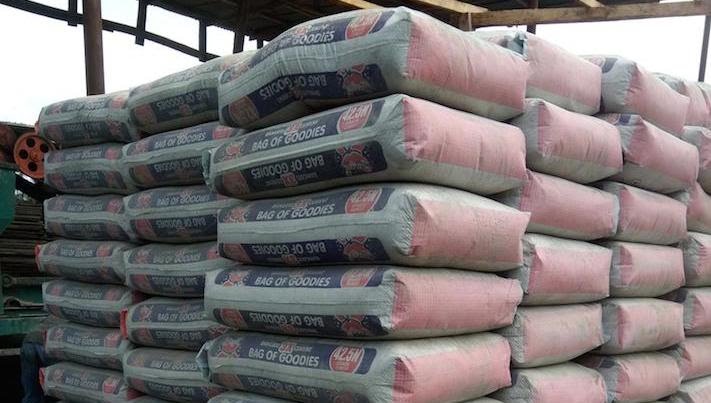
Cement price jumps to N16,000 per bag
Granite has risen from N530,000 to N780,000 per 30 tonnes. Reinforcing steel now costs N1.15 million per tonne, up from N850,000.




Granite has risen from N530,000 to N780,000 per 30 tonnes. Reinforcing steel now costs N1.15 million per tonne, up from N850,000.
OPay had appointed Citigroup, Deutsche Bank, and JPMorgan Chase to work on its planned US IPO, with the company targeting a valuation of about $4 billion.

The Education Minister said that the measures are aimed at strengthening NELFUND’s financial capacity, with more than 1.2 million students currently benefiting from the scheme.
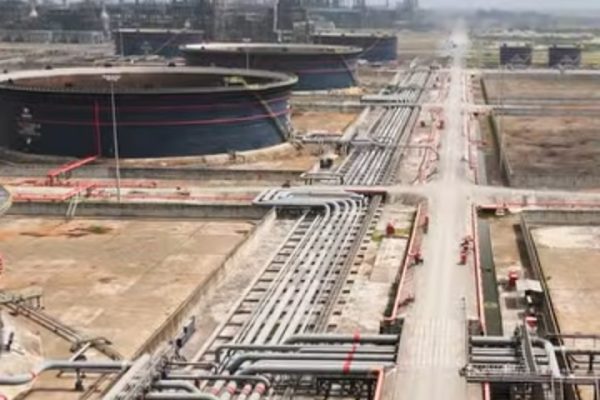
Nigeria’s challenge is no longer simply mobilising capital; it is creating the conditions under which banks can profitably lend that capital to businesses capable of producing, expanding, exporting and creating jobs,writes FRANKLIN OCHENEYI • Image: Dangote Petroleum Refinery, Lagos. RECENTLY, the Central Bank of Nigeria (CBN) Governor, Olayemi Cardoso , urged commercial banks to lend…

The President hurled the challenge on Tuesday in Ilorin, Kwara State, during the 37th Annual Conference and General Assembly of the Committee of Vice-Chancellors of Nigerian Universities (CVCNU), held at the University of Ilorin.
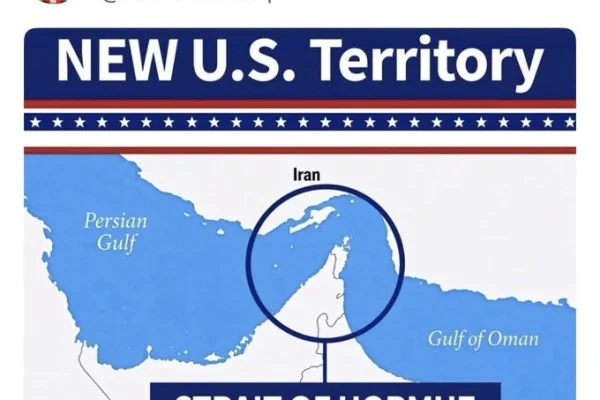
The Strait of Hormuz, which handled about a fifth of the world’s crude oil and gas before the war, has become the central flashpoint between the U.S. and Iran since February.

Electricity remains the bedrock of economic growth. Every thriving industrial cluster, commercial district, healthcare facility, educational institution, and household depends on a steady and reliable power supply for optimal performance.
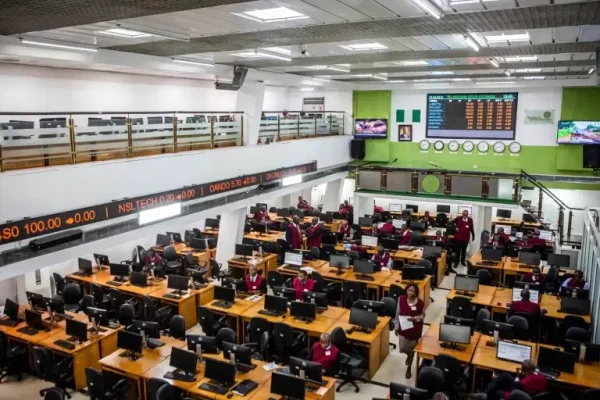
Twenty-four companies have emerged as the most valuable stocks on the Nigerian Exchange Limited (NGX) year-to-date (YtD) as of August 17, 2026. They account for 74.8 percent of the total market capitalisation of the equities market. The Vanguard reported that the 24 companies, drawn largely from the banking, consumer goods, industrial goods and energy sectors,…
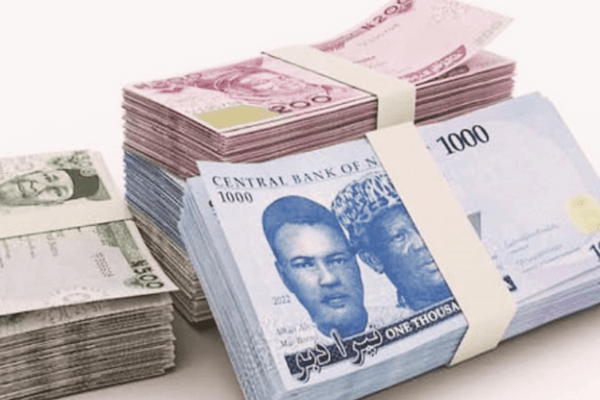
BLACK MARKET RATES US Dollar (USD) Buy ₦1,405 Sell ₦1,413 Great British Pound (GBP) Buy ₦1,880 Sell: ₦1,900 EURO (EUR) Buy ₦1,580 Sell ₦1,600 Canadian Dollar (CAD) Buy ₦1,020 Sell ₦1,080 South African Rand (ZAR) Buy ₦75 Sell ₦90 Ghana Cedi (GHS) Buy ₦95 Sell ₦110 West African CFA Buy ₦2, 300 Sell ₦2, 400…
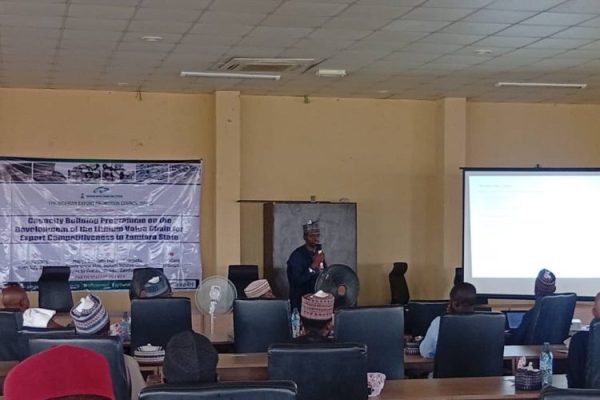
• Muhammad Gambo-Yaro, delivered a presentation during the capacity building. The Raw Materials Research and Development Council (RMRDC) has proposed the development of a Zamfara Lithium Development Master Plan, establishment of a verified lithium resource inventory, including the promotion of investment in lithium industrial parks. The Zamfara State Coordinator, Mr. Muhammad Gambo-Yaro, made the call…