








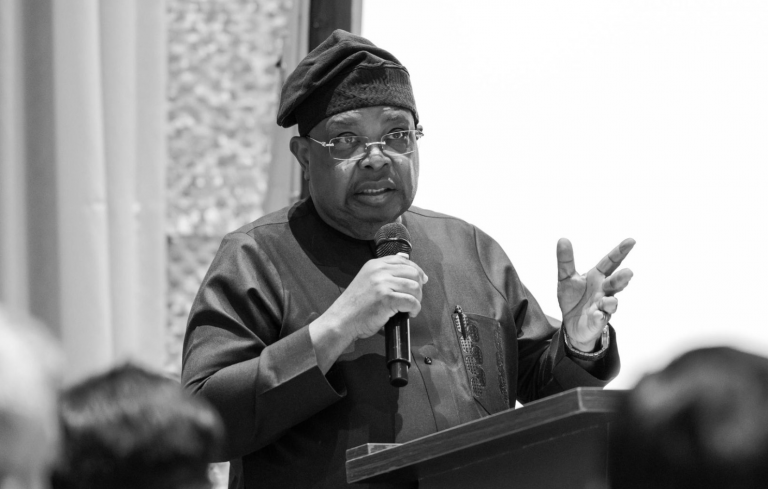
•Minister of Power, Joseph Tegbe
The Federal Government’s decision to investigate about N120 billion in annual unaccounted electricity losses along the 132kV Ikorodu–Sagamu industrial corridor has brought renewed attention to one of the most persistent problems confronting Nigeria’s power sector: the gap between electricity supplied, electricity consumed and electricity ultimately paid for.
The investigation is particularly significant because the Ikorodu–Sagamu corridor is not an ordinary electricity distribution route.
It has evolved into one of Nigeria’s major industrial manufacturing hubs, hosting large-scale businesses and other energy-intensive consumers whose operations depend heavily on stable and predictable power supply.
The Minister of Power, Joseph Tegbe, disclosed that about 100 megawatts of electricity is reportedly being lost along the corridor, prompting the Federal Government to demand a transparent, science-based investigation into the discrepancy between the electricity transmitted and the volume officially billed and accounted for by distribution companies.
The scale of the alleged loss is substantial.
At an estimated N120 billion annually, the value represents electricity that is being generated and transmitted but is not being properly converted into revenue within the electricity market.
For a sector already struggling with liquidity challenges, inadequate investment and mounting obligations across the electricity value chain, such losses could further weaken the financial position of market participants.
Technology exposes the gap
The investigation followed increased visibility provided by technological monitoring systems deployed by the Nigerian Independent System Operator (NISO), which reportedly identified unusual loading patterns and significant commercial losses across the network.
The development demonstrates the growing importance of data and real-time monitoring in tackling inefficiencies within Nigeria’s electricity market.
For years, losses in the power sector have often been discussed in broad terms, covering technical losses arising from the physical limitations of the network as well as commercial losses associated with inaccurate metering, energy theft, billing deficiencies and other forms of revenue leakage.
The availability of more sophisticated monitoring systems could make it increasingly difficult for unexplained discrepancies between transmitted electricity and billed consumption to remain undetected.
The Federal Government’s directive is therefore a welcome development, but the real test will be what follows the investigation.
The government’s challenge now is to translate the information generated by these technologies into effective enforcement and measurable financial recovery.Industrial consumers under scrutiny.
The minister’s directive also carries implications for manufacturers operating along the corridor.Industrial consumers require large and continuous quantities of electricity, making accurate metering particularly important.
Where the quantity of electricity consumed cannot be reliably established, disputes can arise between consumers, distribution companies and other market participants over billing and payment obligations.
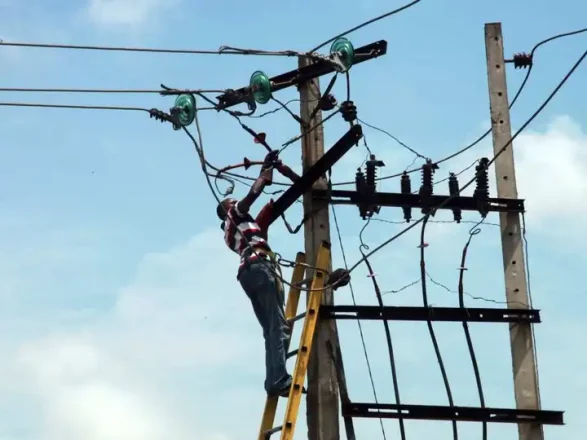
Tegbe made it clear that the government would no longer tolerate meter tampering, deliberate manipulation of consumption data or interference with electricity infrastructure.
His position is significant because tackling energy theft cannot be limited to households and small businesses.
Large commercial and industrial consumers must also be subject to transparent measurement and accountability. At the same time, enforcement will need to be based on credible data.
Industrial operators must have confidence that the metering and monitoring systems used to determine their consumption are accurate, independently verifiable and consistently applied.
A question of market liquidity
Beyond the immediate issue of theft, the reported N120 billion loss raises a larger question about the financial sustainability of Nigeria’s electricity market.
Electricity is ultimately a commercial product. Power is generated, transmitted, distributed and consumed, with each stage carrying costs that must eventually be recovered through payment.
When electricity enters the distribution network but is not properly measured or paid for, the resulting revenue gap affects the entire value chain.
Persistent commercial losses can discourage investment because investors need confidence that electricity supplied to customers can be converted into predictable revenue.
They can also contribute to cash-flow pressures for distribution companies, limiting their ability to invest in metering, network upgrades and other infrastructure required to improve service.
This creates a vicious cycle: poor infrastructure contributes to losses; losses weaken the finances of electricity companies; and weak finances constrain investment in infrastructure.
Breaking that cycle will require more than arrests or penalties. It will require sustained investment in metering, network monitoring, data management and enforcement.
Industrial growth depends on reliable power
The Ikorodu–Sagamu corridor illustrates the close relationship between electricity and industrial development.
Manufacturers operating in industrial clusters need reliable electricity not only to keep production lines running but also to control operating costs.
Where grid electricity is inadequate or unpredictable, businesses are often compelled to rely on alternative sources of power, increasing production costs.
Consequently, improving electricity accountability along major industrial corridors should be viewed not merely as a revenue-recovery exercise but also as part of Nigeria’s broader industrialisation strategy.
If the government succeeds in reducing energy theft and commercial losses while ensuring that legitimate consumers receive properly measured electricity, the benefits could extend beyond the electricity market.
More efficient electricity distribution could improve the operating environment for manufacturers, strengthen the finances of power-sector companies and create greater confidence for investment in industrial production.
Investigation must produce results
The Federal Government’s directive is therefore a welcome development, but the real test will be what follows the investigation.
Authorities must determine where the reported 100MW discrepancy originates, how much electricity is actually being consumed, who is responsible for the unaccounted energy and how the losses can be permanently eliminated.
The process should also be sufficiently transparent to distinguish genuine energy theft from technical losses, metering deficiencies, billing errors and other weaknesses within the electricity value chain.
Most importantly, the outcome should not become another report that gathers dust after the initial public attention fades.
Nigeria cannot afford to generate, transmit and distribute valuable electricity only to lose billions of naira through leakages that could have been detected and addressed.
The reported N120 billion annual loss along the Ikorodu–Sagamu corridor is therefore more than an electricity-sector statistic. It is a warning about the economic cost of weak accountability.
For Nigeria’s power sector to become commercially sustainable—and for its industrial ambitions to be realised—every megawatt supplied must increasingly be traceable, measurable and ultimately accountable.