

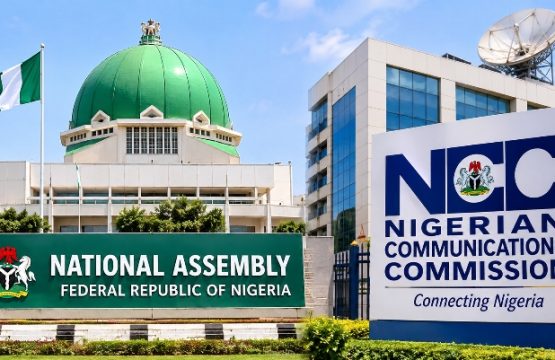





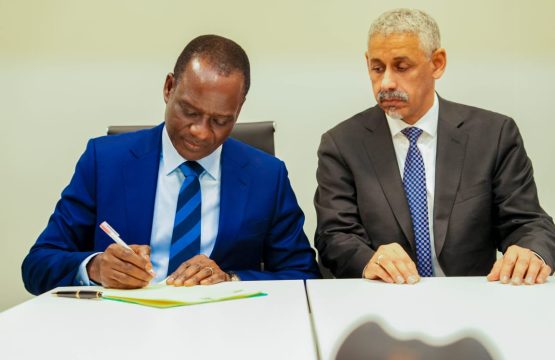

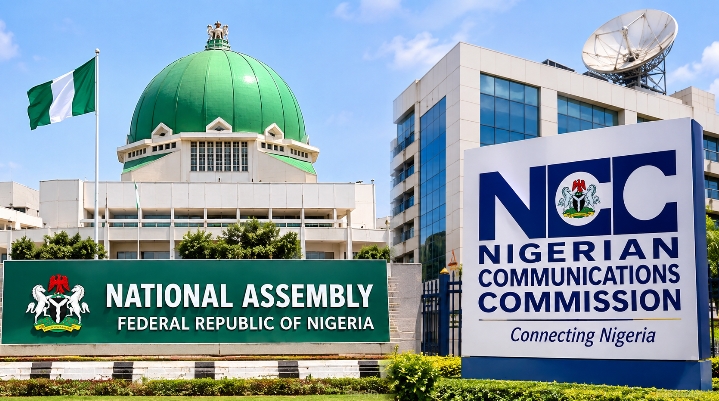
The battle over who should hold Nigeria’s telecommunications operators accountable for poor network services has moved to the courtroom, raising fundamental questions about the respective powers of the Nigerian Communications Commission (NCC) and the National Assembly.
Five major telecommunications industry stakeholders have dragged the House of Representatives before the Federal High Court in Abuja, challenging lawmakers’ powers to investigate poor network services and summon the chief executives of private telecom companies.
The suit was instituted on November 4, 2026, by the Association of Licensed Telecommunications Operators of Nigeria (ALTON), MTN Nigeria, Airtel Networks, Globacom and Emerging Markets Telecommunications Services Limited, operators of 9mobile.
At the centre of the dispute is the interpretation of Sections 88 and 89 of the 1999 Constitution, which deal with the investigative powers of the National Assembly and its authority to summon witnesses.
The operators want the court to determine whether lawmakers can directly investigate private telecommunications companies over service quality or whether such responsibilities fall primarily within the statutory mandate of the NCC.
ALTON and the four operators argue that legislative investigations must remain within the constitutional limits prescribed by Section 88.
They maintain that such investigations should be connected to lawmaking or exposing corruption, inefficiency and waste in the administration of laws and management of public funds appropriated by the National Assembly.
According to the operators, privately owned telecommunications companies do not administer legislation or manage public funds appropriated by Parliament, making the lawmakers’ investigation constitutionally questionable.
They are consequently asking the court to declare the disputed summonses unconstitutional and restrain the committee from issuing or enforcing arrest warrants against their chief executives.
The operators also argue that allowing lawmakers to assume the NCC’s regulatory responsibilities could create overlapping regulatory structures and undermine the established telecommunications regulatory framework.
Under the Nigerian Communications Act 2003 and the Quality of Service Regulations 2024, the NCC is empowered to establish, monitor and enforce service quality standards across the telecommunications industry.
However, lawmakers insist that the existence of a specialised industry regulator does not strip the National Assembly of its constitutional oversight responsibilities.
The House maintains that it has the authority to investigate matters relating to the implementation of laws governing the telecommunications industry and demand explanations from operators whose services affect millions of Nigerians.
The disagreement escalated after the House Ad Hoc Committee on Telecommunications Quality of Service invited telecom executives to explain persistent complaints about poor network performance.
Following the executives’ failure to appear at the committee’s subsequent hearing, lawmakers issued fresh summonses demanding their personal appearance on November 4, threatening arrest warrants for non-compliance.
ALTON offered to represent its members before the committee, but lawmakers rejected the arrangement, insisting that individual telecommunications operators must personally account for their performance.
The latest suit also revives an earlier legal disagreement reportedly initiated by ALTON in 2018 over similar legislative summonses.
Meanwhile, the constitutional battle is unfolding against the backdrop of persistent complaints by subscribers about dropped calls, unstable internet connections, failed airtime and data transactions and frequent network disruptions.
The NCC disclosed in October that approximately 75 million subscribers had received compensation for poor network services in 2026. Nearly three million customers also received refunds for failed airtime and data transactions.
The commission further reported more than 6,500 network interventions during the year.
Its Executive Vice Chairman, Dr Aminu Maida, disclosed the figures on October 20 at the 95th edition of the Telecom Consumer Parliament in Lagos.
These figures raise an important question: if millions of subscribers continue to experience poor services despite regulatory interventions and compensation measures, are existing enforcement mechanisms sufficiently effective?
“For consumers and businesses, the most important question is not who summons the telecom operators, but who ensures that their networks work.”
More importantly, should lawmakers remain spectators when the quality of telecommunications services becomes a matter of national economic concern?
Telecommunications infrastructure has become critical to Nigeria’s economic activities, supporting banking transactions, manufacturing, education, commerce, government services and the growing digital economy.
Poor network connectivity therefore goes beyond inconvenience to individual subscribers.
It affects business productivity, financial transactions, commercial communication and the country’s digital competitiveness.
While the NCC has the technical expertise and statutory mandate to regulate service quality, the National Assembly has a legitimate interest in examining whether existing laws and regulatory institutions are delivering the outcomes intended by the legislature.
The distinction, however, is between legislative oversight and direct regulatory intervention.
The court’s eventual interpretation of Sections 88 and 89 could establish an important boundary between the investigative powers of lawmakers and the statutory responsibilities of industry regulators.
Ultimately, the objective should not be to determine which institution wins the supremacy contest, but to ensure that telecommunications operators are held accountable, regulatory enforcement becomes more effective and millions of Nigerian subscribers receive reliable services.
For consumers and businesses, the most important question is not who summons the telecom operators, but who ensures that their networks work.